FIRST TIME BUYER ? - Use Code FIRSTTIME to enjoy 5% additional discount on entire store

Why Do Pimples Keep Coming Back? Causes & Best Acne Treatment
Wondering why pimples keep coming back? Learn the real Causes & Best Acne Treatment, how to prevent breakouts, and the best skincare routine for clearer skin.
6/18/20264 min read
Why Do Pimples Keep Coming Back?
Have you ever treated a pimple, watched it disappear, only to find another one popping up a few days later?
Recurring pimples can be frustrating and often make it feel like your skincare routine isn't working. The truth is that acne isn't just about dirty skin—it develops because of a combination of oil production, clogged pores, bacteria, inflammation, hormones, and lifestyle habits.
If you only treat the visible pimple without addressing the underlying causes, new breakouts are likely to appear.
In this guide, we'll explain why pimples keep returning, what triggers recurring acne, and how to build a skincare routine that helps reduce future breakouts.
What Causes Pimples?
Pimples develop when four factors come together:
Excess oil (sebum) production
Clogged pores
Growth of acne-causing bacteria
Inflammation
When pores become blocked with oil and dead skin cells, bacteria multiply inside them, leading to redness, swelling, and acne.
If these underlying factors continue, new pimples will continue to form.
10 Reasons Why Pimples Keep Coming Back
1. Excess Oil Production
Some people naturally produce more sebum than others.
Excess oil mixes with dead skin cells and blocks pores, creating the perfect environment for acne.
Oily skin doesn't always cause acne, but it significantly increases the risk of recurring breakouts.
2. Hormonal Changes
Hormonal fluctuations increase oil production.
Common triggers include:
Puberty
Menstrual cycles
PCOS
Pregnancy
Stress
Certain medications
Hormonal acne often appears on the:
Chin
Jawline
Lower cheeks
3. Incomplete Acne Treatment
Many people stop using acne products as soon as their skin starts looking better.
However, acne begins forming weeks before it becomes visible.
Consistent treatment helps prevent new pimples from developing beneath the skin.
4. Using the Wrong Skincare Products
Heavy creams, pore-clogging makeup, or products not suitable for acne-prone skin may contribute to recurring breakouts.
Look for products labeled non-comedogenic, meaning they're formulated to avoid clogging pores.
5. Touching Your Face Frequently
Your hands carry oil, dirt, and bacteria throughout the day.
Constantly touching or picking your face transfers these impurities onto your skin and can worsen acne while increasing the risk of acne marks.
6. Stress
Stress doesn't directly cause acne, but it increases cortisol levels, which may stimulate oil production and worsen inflammation.
Many people notice more breakouts during exams, deadlines, or emotionally stressful periods.
7. Poor Cleansing Habits
Sleeping with makeup, sunscreen, or excess oil on your skin allows pores to become clogged.
Cleanse your face gently twice daily to remove impurities without over-drying the skin.
8. Diet May Play a Role
Research suggests that diets high in refined carbohydrates and sugary foods may worsen acne in some individuals.
While food isn't the sole cause, a balanced diet supports healthier skin.
9. Dirty Pillowcases and Phones
Pillowcases, towels, and mobile phones accumulate oil, sweat, and bacteria over time.
Regular cleaning may help reduce unnecessary bacterial exposure.
10. Not Wearing Sunscreen
Many people avoid sunscreen because they think it causes acne.
However, modern lightweight sunscreens designed for acne-prone skin help protect against UV damage without feeling greasy.
Sun exposure can also worsen post-acne marks, making your skin appear uneven even after pimples heal.
Why Treating Only Pimples Isn't Enough
Many spot treatments simply dry out existing pimples.
They don't address:
Excess oil production
Clogged pores
Acne-causing bacteria
Inflammation
Future breakouts
An effective skincare routine focuses on prevention as much as treatment.
Ingredients That Help Reduce Recurring Acne
Salicylic Acid
Salicylic Acid penetrates deep into pores to remove excess oil and dead skin cells.
It is one of the most effective ingredients for preventing clogged pores.
Niacinamide
Niacinamide helps:
Control excess oil
Reduce redness
Strengthen the skin barrier
Improve post-acne marks
Zinc PCA
Zinc PCA helps regulate sebum production while calming acne-prone skin.
Tea Tree Extract
Tea Tree Extract has natural antimicrobial properties that may help reduce acne-causing bacteria when included in well-formulated skincare products.
Best Serum for Recurring Pimples
If your acne keeps returning, you need a serum that targets multiple causes of acne—not just existing pimples.
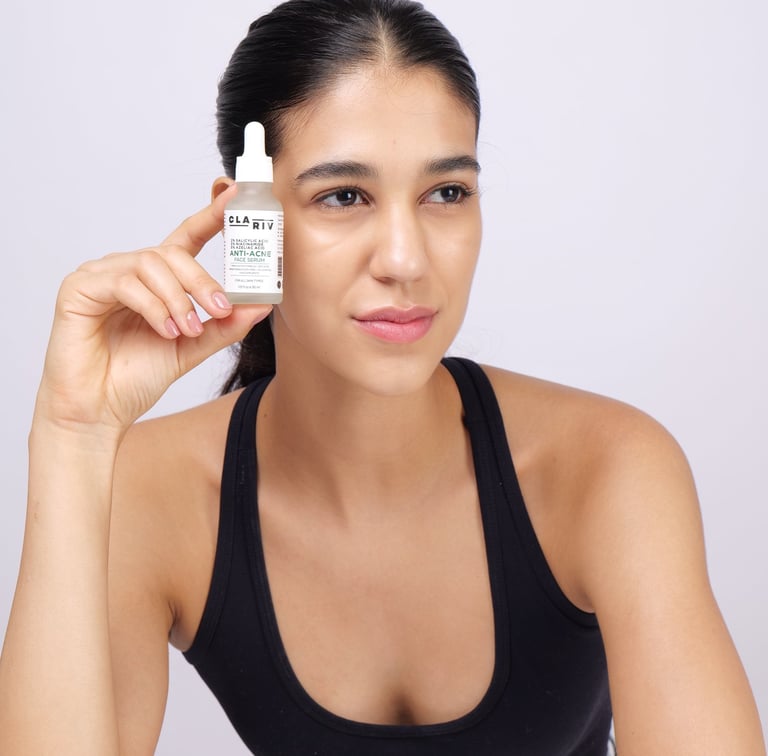
CLARIV Anti Acne Face Serum is formulated to support acne-prone skin by helping address the key factors behind recurring breakouts.
Its carefully selected active ingredients help:
Control excess oil
Keep pores clearer
Calm redness and irritation
Support the skin's natural barrier
Reduce the appearance of post-acne marks
Promote healthier-looking skin with regular use
Instead of simply drying individual pimples, it works as part of a consistent skincare routine to improve the overall condition of acne-prone skin.
Morning Skincare Routine for Acne-Prone Skin
Step 1
Cleanse with a gentle face wash.
Step 2
Apply CLARIV Anti Acne Face Serum.
Step 3
Use a lightweight moisturizer.
Step 4
Finish with CLARIV Sunscreen SPF 50 PA++++ to protect your skin from UV damage and help prevent acne marks from becoming darker.
Night Skincare Routine
Cleanse your face thoroughly.
Apply CLARIV Anti Acne Face Serum.
Finish with a moisturizer if your skin feels dry.
Consistency is more important than using many products.
Lifestyle Tips to Prevent Recurring Pimples
Wash your face twice daily.
Avoid squeezing pimples.
Change pillowcases every few days.
Clean your phone screen regularly.
Remove makeup before sleeping.
Manage stress through exercise or meditation.
Stay hydrated.
Eat a balanced diet rich in fruits and vegetables.
Get 7–8 hours of quality sleep.
When Should You See a Dermatologist?
Consult a dermatologist if:
Acne is painful or cystic.
Pimples leave deep scars.
Over-the-counter skincare hasn't helped after several weeks of consistent use.
Acne suddenly becomes severe.
Professional treatment may be necessary for hormonal or persistent acne.
Frequently Asked Questions
Why do pimples come back in the same place?
Recurring pimples often develop because the pore remains clogged beneath the skin or because inflammation has not completely resolved.
Can stress cause recurring acne?
Stress may worsen acne by increasing hormones that stimulate oil production, making breakouts more frequent in susceptible individuals.
Does washing your face more often prevent acne?
No. Overwashing can damage the skin barrier and may lead to irritation. Washing your face twice daily is usually sufficient.
How long does it take for acne treatments to work?
Most acne treatments require consistent use for 6–12 weeks before noticeable improvement. Acne develops beneath the skin before it becomes visible, so patience and consistency are important.
Can sunscreen make acne worse?
Not necessarily. Lightweight, non-comedogenic sunscreens are designed to protect the skin without clogging pores and can help reduce the appearance of post-acne pigmentation caused by sun exposure.
Final Thoughts
Recurring pimples aren't a sign that your skin is dirty—they're usually the result of ongoing factors such as excess oil, clogged pores, hormones, bacteria, and inflammation.
The key to clearer skin is consistency. Instead of only treating visible pimples, follow a routine that targets the root causes of acne while protecting your skin every day.
A simple routine that includes a gentle cleanser, CLARIV Anti Acne Face Serum, a lightweight moisturizer, and CLARIV Sunscreen SPF 50 PA++++ can help support healthier-looking skin and reduce the likelihood of future breakouts over time.
Remember, healthy skin is built through consistent daily care—not overnight fixes.
info@clariv.in
+91-92204-02087