FIRST TIME BUYER ? - Use Code FIRSTTIME to enjoy 5% additional discount on entire store

What Causes Sudden Pigmentation in Winters? (Scientific Reasons & Solutions Inside)
Experiencing Pigmentation in Winters? Learn the scientific reasons behind winter pigmentation and how CLARIV Anti Pigmentation Serum corrects it at the root level.
12/30/20252 min read
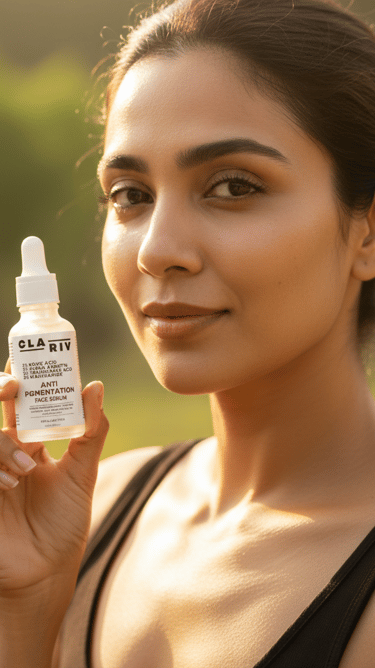
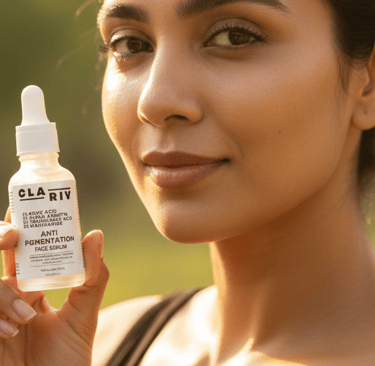
Many people assume pigmentation is a summer-only problem, but dermatologists see a surprising spike in new or worsening pigmentation during winters—especially in Indian skin. If you’ve noticed sudden dark patches, uneven tone, or dullness in cold months, it’s not “random.”
There are clear scientific reasons behind winter pigmentation—and once you understand them, the solution becomes much simpler.
Understanding Pigmentation: A Quick Scientific Primer
Pigmentation occurs due to excess production of melanin, the pigment responsible for skin color. Melanin is produced by cells called melanocytes in response to triggers such as:
UV radiation
Inflammation
Hormonal changes
Skin barrier damage
In winters, several hidden triggers combine to activate melanocytes, leading to sudden pigmentation.
1. Winter Sun Still Triggers Melanin (UV Damage Is Real)
Many people skip sunscreen in winters, assuming the sun is “weak.” Scientifically, this is incorrect.
UVA rays remain constant year-round
UVA penetrates deeper into the skin
It directly stimulates melanocytes
➡️ Result: Gradual melanin overproduction, leading to dark spots and uneven tone even without tanning.
2. Dryness Weakens the Skin Barrier (Key Scientific Cause)
Cold air + low humidity = increased transepidermal water loss (TEWL).
When the skin barrier is compromised:
Skin becomes inflamed at a micro level
Inflammatory mediators activate melanocytes
Pigmentation appears post-inflammation
📌 This is why pigmentation often follows winter dryness, itching, or flaking.
3. Increased Inflammation Due to Over-Exfoliation
In winters, many people:
Use harsh face washes
Over-exfoliate to remove dryness
Use alcohol-based products
This causes subclinical inflammation, which triggers a process known as post-inflammatory hyperpigmentation (PIH)—especially common in Indian skin types (Fitzpatrick IV–V).
4. Reduced Cell Turnover in Cold Weather
Scientifically, colder temperatures slow down:
Skin metabolism
Natural exfoliation (cell turnover)
This leads to:
Accumulation of pigmented dead cells
Dull, patchy appearance
Dark spots becoming more visible
5. Hormonal & Stress-Induced Winter Pigmentation
Less sunlight, lifestyle changes, and stress can:
Increase cortisol levels
Disrupt hormonal balance
This indirectly stimulates melanin synthesis, worsening conditions like melasma and uneven pigmentation.
Why Treating Winter Pigmentation Needs a Targeted Approach
To scientifically correct pigmentation, a product must:
Inhibit melanin production
Block tyrosinase enzyme (key in melanin synthesis)
Reduce inflammation
Strengthen the skin barrier
Support healthy cell turnover
This is where CLARIV Anti Pigmentation Serum stands out.
How CLARIV Anti Pigmentation Serum Works (Scientifically)
CLARIV uses a multi-pathway pigmentation correction approach, backed by dermatological science.
🔬 1. Kojic Acid (2%) – Tyrosinase Inhibitor
Directly inhibits tyrosinase enzyme
Reduces melanin synthesis at the source
Effective for dark spots and sun-induced pigmentation
🔬 2. Alpha Arbutin (2%) – Melanin Regulation
Controls melanin release
Brightens skin without irritation
Safer alternative to hydroquinone
🔬 3. Tranexamic Acid (3%) – Melasma & PIH Expert
Blocks inflammation-induced pigmentation pathways
Clinically proven for melasma
Reduces vascular and UV-triggered pigmentation
🔬 4. Niacinamide (5%) – Barrier Repair + Tone Correction
Strengthens skin barrier (crucial in winters)
Reduces inflammation
Prevents pigment transfer to skin cells
🔬 Supportive Ingredients
Hyaluronic Acid & Aloe Vera → combat winter dryness
Licorice & Daisy Extracts → natural brightening agents
Vitamin E & Allantoin → soothe inflammation
Together, these ingredients don’t just fade spots—they prevent new pigmentation from forming.
How to Use CLARIV Anti Pigmentation Serum in Winters
AM & PM Routine:
Cleanse with a gentle face wash
Apply 2–3 drops of CLARIV Anti Pigmentation Serum
Follow with a nourishing moisturizer
In the morning, never skip sunscreen
✔ Suitable for all skin types
✔ Safe for winter use
✔ Non-greasy and barrier-friendly
When Will You See Results?
Scientifically realistic timeline:
2–3 weeks: Reduced dullness, improved hydration
4–6 weeks: Visible lightening of spots
8–12 weeks: More even, clearer skin tone
Consistency is key—melanin correction is gradual but permanent when done correctly.
Final Thoughts: Winter Pigmentation Is Preventable & Treatable
Sudden pigmentation in winters is not bad luck—it’s the result of:
UV exposure without protection
Barrier damage
Inflammation and slowed skin renewal
With a science-backed formulation like CLARIV Anti Pigmentation Serum, you can treat pigmentation at the root—safely, effectively, and season-appropriately.
✨ Winters don’t have to dull your glow. Treat pigmentation scientifically—with CLARIV.
info@clariv.in
+91-92204-02087