FIRST TIME BUYER ? - Use Code FIRSTTIME to enjoy 5% additional discount on entire store

Hyperpigmentation vs Melasma vs Dark Spots Explained
Confused between Hyperpigmentation vs Melasma vs Dark Spots? Learn the differences, causes, symptoms, and best treatment options in this complete guide.
6/28/20266 min read
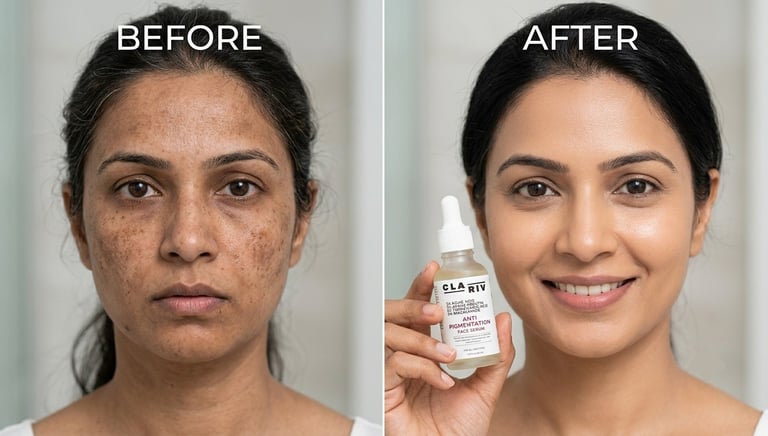
Hyperpigmentation vs Melasma vs Dark Spots: What's the Difference?
Hyperpigmentation is an umbrella term for areas of skin that become darker due to excess melanin production. Melasma is a specific type of hyperpigmentation, usually triggered by hormonal changes and sun exposure, while dark spots are localized patches that often develop after acne, injury, or prolonged sun exposure. Understanding which type you have is essential because each may require a different treatment approach.
Hyperpigmentation is a broad term for any skin darkening caused by excess melanin.
Melasma is a hormone-related type of hyperpigmentation that often appears in larger, symmetrical patches.
Dark spots are smaller, localized areas caused by acne, sun damage, or skin injury.
Daily sunscreen is essential for managing all three conditions.
Ingredients like Tranexamic Acid, Kojic Acid, Alpha Arbutin, Niacinamide, and Vitamin C can help improve uneven skin tone over time.
Correctly identifying the type of pigmentation helps you choose the most effective skincare routine.
What Is Hyperpigmentation?
Hyperpigmentation is the medical term for any condition in which certain areas of the skin become darker than the surrounding skin due to excess melanin production.
Melanin is the pigment that gives your skin its natural colour. When melanocytes produce too much melanin, it collects in specific areas, resulting in uneven skin tone.
Hyperpigmentation is not a disease. Instead, it is a broad category that includes several skin conditions, such as:
Melasma
Post-inflammatory hyperpigmentation (PIH)
Sunspots (solar lentigines)
Age spots
Freckles (in some cases)
In simple words, melasma and many dark spots are different forms of hyperpigmentation.
What Is Melasma?
Melasma is a chronic form of hyperpigmentation that usually develops because of hormonal changes combined with sun exposure.
Unlike ordinary dark spots, melasma typically appears as large, symmetrical brown or grey-brown patches.
Common areas include:
Cheeks
Forehead
Nose
Upper lip
Chin
Melasma is commonly seen in:
Pregnant women
People taking hormonal contraceptives
Individuals with hormonal fluctuations
People who spend significant time in the sun
Because hormones play a role, melasma often requires long-term management rather than a quick fix.
What Are Dark Spots?
Dark spots are small, localized patches of pigmentation that appear after skin damage or prolonged sun exposure.
Unlike melasma, dark spots usually occur individually rather than as large patches.
Common causes include:
Acne
Pimples
Cuts and burns
Insect bites
Sun damage
Skin irritation
One of the most common types is Post-Inflammatory Hyperpigmentation (PIH), where the skin produces excess melanin while healing after inflammation.
Hyperpigmentation vs Melasma vs Dark Spots
Although these terms are often used interchangeably, they are not the same.
Although these terms are often used interchangeably, they refer to different types of skin pigmentation. Understanding the differences can help you choose the most suitable skincare routine and treatment.
Hyperpigmentation
Meaning: A broad term for any area of skin that becomes darker due to excess melanin production.
Appearance: Can appear as small spots, large patches, or uneven skin tone.
Common Causes: Sun exposure, acne, inflammation, hormonal changes, ageing, and certain medications.
Where It Appears: Can occur anywhere on the face or body.
Treatment Focus: Depends on the underlying cause but generally includes targeted skincare ingredients and daily sun protection.
Melasma
Meaning: A specific type of hyperpigmentation, usually triggered by hormonal changes and worsened by sun exposure.
Appearance: Large, symmetrical brown or grey-brown patches.
Common Causes: Pregnancy, hormonal fluctuations, birth control pills, and UV exposure.
Where It Appears: Most commonly on the cheeks, forehead, nose, upper lip, and chin.
Treatment Focus: Long-term management with pigmentation-targeting ingredients and strict daily sunscreen use, as melasma can recur.
Dark Spots
Meaning: Small, localized areas of pigmentation that develop after skin damage or prolonged sun exposure.
Appearance: Individual, well-defined brown or black spots.
Common Causes: Acne, pimples, cuts, burns, insect bites, and sun damage.
Where They Appear: Usually at the exact site where the skin was previously inflamed or injured.
Treatment Focus: Addressing the underlying cause, using brightening ingredients, and protecting the skin from further UV damage.
How Can You Identify Your Type of Pigmentation?
Hyperpigmentation may be more likely if:
You notice general skin darkening.
Pigmentation developed after sun exposure or irritation.
The affected areas vary in size.
Melasma may be more likely if:
Brown patches appear on both sides of the face.
Pigmentation worsens during pregnancy or hormonal changes.
It becomes darker after sun exposure.
Dark spots may be more likely if:
A mark appears exactly where a pimple or injury healed.
Spots are small and well-defined.
The surrounding skin looks normal.
If you are unsure, consult a dermatologist for an accurate diagnosis.
Why Does the Difference Matter?
Knowing the type of pigmentation helps you choose the right skincare strategy.
For example:
Melasma often requires long-term sun protection because it has a high chance of recurring.
Post-inflammatory hyperpigmentation improves more effectively when the underlying cause, such as acne, is controlled.
Sunspots are best prevented through daily sunscreen and limiting UV exposure.
Treating all pigmentation as if it were the same may delay visible improvement.
Ingredients That May Help Different Types of Pigmentation
Although the causes differ, several well-studied skincare ingredients are commonly recommended for improving uneven skin tone.
Tranexamic Acid
Helps interrupt pathways involved in excess melanin production and is often used for melasma and stubborn pigmentation.
Kojic Acid
Helps inhibit tyrosinase, the enzyme involved in melanin formation, making it useful for dark spots and uneven skin tone.
Alpha Arbutin
Supports a brighter-looking complexion and helps improve the appearance of mild to moderate pigmentation.
Niacinamide
Helps reduce the transfer of melanin to skin cells while strengthening the skin barrier.
Vitamin C
Provides antioxidant protection against environmental damage while supporting a brighter, more even complexion.
Because pigmentation often has multiple causes, combining complementary ingredients may provide broader support than relying on a single active ingredient.
For example, CLARIV Anti Pigmentation Serum combines Tranexamic Acid, Kojic Acid, Alpha Arbutin, and Niacinamide in one formulation to target multiple pathways involved in uneven skin tone. During the day, CLARIV Sunscreen SPF 50 PA++++ helps protect against UV-induced pigmentation, while CLARIV 10% Vitamin C Serum can complement your routine by providing antioxidant support and improving skin radiance.
Can Sunscreen Help All Three Conditions?
Yes. Sunscreen is one of the most important steps for managing hyperpigmentation, melasma, and dark spots.
Ultraviolet rays stimulate melanin production, which can make existing pigmentation darker and trigger new pigmentation.
Choose a broad-spectrum sunscreen with SPF 50 PA++++ and apply it every morning. Reapply if you spend extended periods outdoors.
Without consistent sun protection, even the best pigmentation serum may not deliver its full potential.
When Should You See a Dermatologist?
Consider seeking professional advice if:
Pigmentation appears suddenly without an obvious cause.
Large patches continue spreading.
Home skincare has not improved pigmentation after several months.
Pigmentation is associated with pain, bleeding, or significant irritation.
You are unsure whether you have melasma, sunspots, or another skin condition.
Early diagnosis can help you choose the most appropriate treatment plan.
Frequently Asked Questions
1. Is melasma the same as hyperpigmentation?
No. Hyperpigmentation is a broad category of skin darkening, while melasma is one specific type of hyperpigmentation usually linked to hormonal changes and sun exposure.
2. Are dark spots considered hyperpigmentation?
Yes. Most dark spots are a form of hyperpigmentation because they result from excess melanin production.
3. Can melasma disappear permanently?
Melasma can improve significantly, but it often returns with sun exposure or hormonal changes. Daily sunscreen and a consistent skincare routine help reduce recurrence.
4. Which type of pigmentation is easiest to treat?
Recent post-inflammatory hyperpigmentation from acne often responds well to consistent skincare and sun protection. Melasma generally requires longer-term management.
5. Can Vitamin C help with all types of pigmentation?
Vitamin C supports a brighter complexion and provides antioxidant protection. It is commonly used alongside other pigmentation-focused ingredients rather than as the only treatment.
6. Can acne cause melasma?
No. Acne usually causes post-inflammatory hyperpigmentation (PIH) rather than melasma.
7. Is sunscreen necessary if I only have dark spots?
Yes. Sunscreen helps prevent existing spots from becoming darker and reduces the risk of developing new pigmentation.
8. How long does pigmentation usually take to improve?
Many people notice gradual improvement within 8–12 weeks when using appropriate skincare consistently along with daily sun protection.
9. Can I use Tranexamic Acid and Vitamin C together?
Yes. Many people use Vitamin C in the morning for antioxidant protection and a pigmentation serum containing Tranexamic Acid in the evening. If you have sensitive skin, introduce new active ingredients gradually.
10. Do all dark spots require the same treatment?
No. The most effective treatment depends on the underlying cause. Acne marks, melasma, and sunspots may all require different approaches.
Conclusion
Although the terms hyperpigmentation, melasma, and dark spots are often used interchangeably, they describe different skin concerns. Hyperpigmentation is the umbrella term, melasma is a hormone-related subtype, and dark spots are usually localized areas of excess pigment caused by acne, skin injury, or sun exposure.
Understanding which type of pigmentation you have allows you to choose a more targeted skincare routine. Ingredients such as Tranexamic Acid, Kojic Acid, Alpha Arbutin, Niacinamide, and Vitamin C, combined with daily SPF 50 sunscreen, can help improve uneven skin tone over time when used consistently.
If your goal is healthier, more even-looking skin, focus on identifying the root cause of your pigmentation, protecting your skin from UV damage, and choosing science-backed ingredients rather than expecting overnight results.
info@clariv.in
+91-92204-02087