FIRST TIME BUYER ? - Use Code FIRSTTIME to enjoy 5% additional discount on entire store

Dark Spots vs Pigmentation: Key Differences, Causes & Treatment
Confused between Dark Spots vs Pigmentation? Learn the differences, causes, and best treatments. Discover how CLARIV Anti Pigmentation Serum helps reduce both for clearer, brighter skin.
6/20/20264 min read
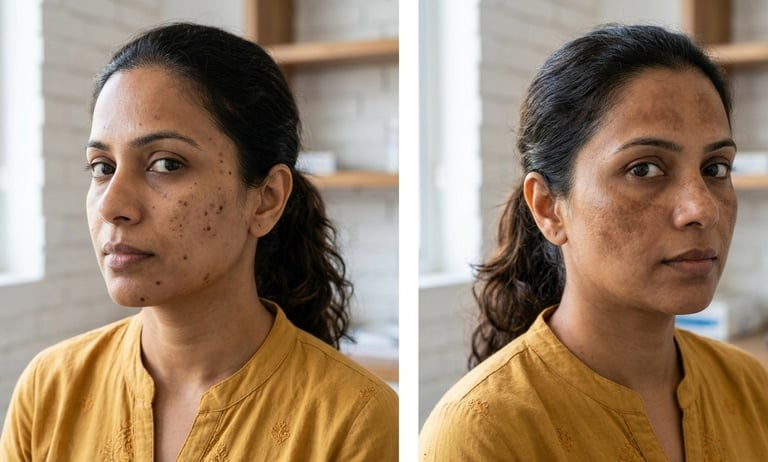
Dark Spots vs Pigmentation: What's the Difference?
If you've ever looked in the mirror and noticed brown patches or small dark marks on your face, you've probably wondered: Are these dark spots or pigmentation?
Many people use these terms interchangeably, but they are not exactly the same. Understanding the difference is important because the underlying cause determines the best treatment.
In this guide, we'll explain what dark spots and pigmentation are, what causes them, and how you can effectively treat and prevent both for healthier, more even-toned skin.
Quick Answer
Dark spots are small, localized areas of excess pigment caused by factors like acne, sun exposure, or skin injuries.
Pigmentation is a broader term that refers to any uneven skin colouring, including dark spots, melasma, freckles, post-inflammatory hyperpigmentation, and sun-induced patches.
In simple terms:
All dark spots are pigmentation, but not all pigmentation is dark spots.
What Are Dark Spots?
Dark spots, also called hyperpigmented spots, are small areas where the skin produces excess melanin.
They usually appear after:
Acne breakouts
Pimples
Cuts or burns
Insect bites
Excessive sun exposure
Dark spots are generally well-defined and limited to a small area.
Common Characteristics
✔ Small and circular
✔ Brown or dark brown
✔ Usually appear after skin damage
✔ Can fade gradually with proper skincare
What Is Pigmentation?
Pigmentation refers to any change in your skin's natural colour due to increased or decreased melanin production.
It may appear as:
Large brown patches
Uneven skin tone
Melasma
Freckles
Sun spots
Post-inflammatory hyperpigmentation (PIH)
Pigmentation often affects larger areas of the face such as:
Forehead
Cheeks
Upper lip
Chin
Around the mouth
Dark Spots vs Pigmentation: What's the Difference?
Here's a quick comparison to help you identify the difference:
Dark Spots
Size: Small, localized marks.
Appearance: Individual dark spots with well-defined edges.
Cause: Commonly caused by acne, wounds, cuts, burns, or sun damage.
Area Affected: Limited to specific areas of the skin.
Treatment: Usually responds well to spot-targeting serums and daily sunscreen.
Pigmentation
Size: Can appear as small spots or large patches.
Appearance: Uneven skin tone or widespread discolouration.
Cause: Often triggered by hormonal changes, prolonged sun exposure, inflammation, ageing, or genetics.
Area Affected: Can cover larger areas of the face, such as the forehead, cheeks, upper lip, and chin.
Treatment: Requires a comprehensive skincare routine with brightening ingredients and consistent sun protection.
What Causes Dark Spots?
Dark spots develop when the skin produces extra melanin during the healing process.
Common triggers include:
Acne Marks
One of the leading causes of dark spots is post-acne marks left behind after pimples heal.
Sun Exposure
UV rays stimulate melanin production, making existing spots darker.
Skin Injuries
Cuts, burns, scratches, and irritation can all leave behind temporary pigmentation.
Inflammation
Any inflammation of the skin can trigger excess pigment production.
What Causes Pigmentation?
Pigmentation has several possible causes, and identifying the trigger is key to choosing the right treatment.
1. Sun Damage
Prolonged UV exposure is one of the biggest causes of uneven skin tone and pigmentation in India.
2. Hormonal Changes
Pregnancy, birth control pills, and hormonal imbalances can lead to melasma, which appears as larger brown patches.
3. Acne and Skin Inflammation
Inflammation increases melanin production, resulting in post-inflammatory hyperpigmentation.
4. Ageing
As skin ages, years of sun exposure may lead to age spots and uneven pigmentation.
5. Genetics
Some individuals are naturally more prone to freckles, melasma, or pigmentation disorders.
Can Dark Spots and Pigmentation Be Treated?
Yes. Most cases improve significantly with consistent skincare and daily sun protection.
Treatment depends on the cause, but dermatologists often recommend ingredients that reduce excess melanin production while supporting healthy skin renewal.
Effective ingredients include:
Niacinamide
Alpha Arbutin
Tranexamic Acid
Kojic Acid
Vitamin C
Hyaluronic Acid (for hydration and skin barrier support)
Consistency is more important than using multiple products. Visible improvement often takes 6 to 12 weeks, depending on the severity of the pigmentation.
How CLARIV Anti Pigmentation Serum Helps
If you're dealing with acne marks, tanning, uneven skin tone, or stubborn pigmentation, using a targeted serum can make a noticeable difference.
CLARIV Anti Pigmentation Serum is formulated with scientifically backed brightening ingredients that work together to:
Reduce dark spots
Fade post-acne marks
Improve uneven skin tone
Minimise pigmentation caused by sun exposure
Support a brighter, healthier complexion
Its lightweight, non-greasy formula makes it suitable for daily use and easy to incorporate into both morning and evening skincare routines.
Daily Routine for Clear, Even-Toned Skin
Morning
Gentle cleanser
CLARIV Vitamin C serum (optional)
Moisturiser
CLARIV Broad-spectrum sunscreen (SPF 50+)
Night
Cleanser
CLARIV Anti Pigmentation Serum
Moisturiser
Daily sunscreen is essential because UV exposure can worsen both dark spots and pigmentation, slowing the skin's natural recovery process.
How to Prevent Dark Spots and Pigmentation
Prevention is often easier than treatment. Follow these simple habits:
Apply sunscreen every day, even indoors.
Avoid picking or squeezing pimples.
Wear hats or sunglasses when outdoors.
Keep your skin moisturised.
Use brightening ingredients consistently.
Reapply sunscreen every 2–3 hours if you're outside.
A proactive routine helps maintain an even complexion and prevents existing pigmentation from becoming darker.
Frequently Asked Questions
Are dark spots the same as pigmentation?
No. Dark spots are a type of pigmentation, but pigmentation also includes larger patches, melasma, freckles, and uneven skin tone.
Which is easier to treat?
Dark spots caused by acne or minor skin injuries usually respond faster to skincare than deeper or hormone-related pigmentation.
Can sunscreen reduce pigmentation?
Sunscreen doesn't remove existing pigmentation, but it prevents it from becoming darker and helps treatment products work more effectively.
How long does it take to fade dark spots?
With a consistent routine, mild dark spots often begin to improve within 6–8 weeks. More stubborn pigmentation may take several months.
Which serum is best for dark spots and pigmentation?
A serum containing ingredients like Niacinamide, Alpha Arbutin, Tranexamic Acid, and Kojic Acid can effectively target multiple forms of pigmentation. CLARIV Anti Pigmentation Serum combines these ingredients to help reduce dark spots, acne marks, tanning, and uneven skin tone.
Final Thoughts
Although dark spots and pigmentation are closely related, they aren't identical. Dark spots are localized marks caused by skin damage, while pigmentation is a broader condition that includes various forms of uneven skin colouring.
Understanding the cause of your skin concern is the first step toward choosing the right treatment. Pairing daily sunscreen with a targeted brightening serum like CLARIV Anti Pigmentation Serum can help fade existing marks, prevent new pigmentation, and restore a clearer, more radiant complexion over time.
CLARIV Anti Pigmentation serum buy link -> https://www.clariv.in/clariv-anti-pigmentation-serum-2percent-kojic-acid-2percent-alpha-arbutin-3percent-tranexamic-acid-and-5percent-niacinamide-or-brightening-serum-for-d
CLARIV SPF 50 sunscreen Buy link -> https://www.clariv.in/pack-of-2-clariv-sunscreen-spf-50-pa-broad-spectrum-protection
CLARIV Vitamin C serum buy link -> https://www.clariv.in/clariv-10percent-vitamin-c-serum
info@clariv.in
+91-92204-02087