FIRST TIME BUYER ? - Use Code FIRSTTIME to enjoy 5% additional discount on entire store

Alpha Arbutin vs Vitamin C: Best for Dark Spots
Discover the differences between alpha arbutin and vitamin C for treating dark spots, pigmentation, and uneven skin tone. Learn which ingredient is most effective and the best times to use each for optimal results.
7/2/20264 min read
Quick Answer
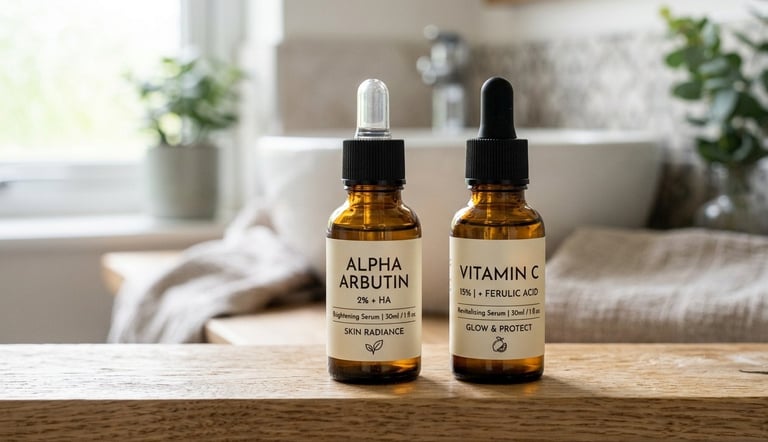
Both Alpha Arbutin and Vitamin C can help reduce dark spots, but they work differently. Alpha Arbutin directly targets excess melanin production, making it especially effective for pigmentation and melasma. Vitamin C primarily acts as an antioxidant that brightens the skin while protecting it from free radical damage. For stubborn pigmentation, a routine that combines Alpha Arbutin with complementary ingredients like Kojic Acid, Tranexamic Acid, and Niacinamide may provide broader support.
Introduction
Dark spots often remain long after acne heals or sun exposure fades. Many people choose between Alpha Arbutin and Vitamin C without understanding how each ingredient works. While both can brighten the complexion, they target pigmentation through different mechanisms.
This guide compares Alpha Arbutin and Vitamin C, explains the science behind each ingredient, and helps you decide which option best suits your skin concerns.
Table of Contents
What Are Dark Spots?
Why Do Dark Spots Develop?
What Is Alpha Arbutin?
What Is Vitamin C?
Alpha Arbutin vs Vitamin C for Dark Spots
Scientific Comparison
Which Ingredient Is Better for Different Skin Concerns?
Can You Use Alpha Arbutin and Vitamin C Together?
Recommended Skincare Routine
Common Mistakes
Expected Timeline
Why CLARIV Anti Pigmentation Serum Fits This Routine
Frequently Asked Questions
Conclusion
## What Are Dark Spots?
Dark spots are areas where the skin produces excess melanin. They commonly appear after acne, excessive sun exposure, inflammation, or hormonal changes. Depending on the cause, they may fade naturally or require targeted skincare.
## Why Do Dark Spots Develop?
Pigmentation develops when melanocytes produce more melanin than surrounding skin. Several factors can trigger this process, including:
UV exposure
Acne inflammation
Hormonal fluctuations
Skin injuries
Aging
Certain medications
Without daily sun protection, pigmentation often becomes darker and lasts longer.
## What Is Alpha Arbutin?
Alpha Arbutin is a skin-brightening ingredient that reduces melanin production by inhibiting tyrosinase, the enzyme responsible for creating pigment. Consequently, existing dark spots gradually fade while new pigmentation becomes less likely to develop.
It is widely recommended for:
Post-acne marks
Melasma
Sun spots
Uneven skin tone
Hyperpigmentation
## What Is Vitamin C?
Vitamin C is a powerful antioxidant that helps protect skin against environmental damage caused by free radicals and UV exposure. In addition, it supports collagen production while improving overall skin brightness.
Vitamin C is especially useful for:
Dull skin
Early pigmentation
Sun damage
Uneven complexion
Supporting healthy-looking skin
## Alpha Arbutin vs Vitamin C for Dark Spots
Both Alpha Arbutin and Vitamin C can improve dark spots, but they work differently. Your choice depends on your primary skin concern.
Choose Alpha Arbutin if you want to:
Fade stubborn dark spots and hyperpigmentation.
Reduce post-acne marks (PIH).
Improve melasma and uneven skin tone.
Target excess melanin production directly.
Use a gentle ingredient suitable for most skin types.
Choose Vitamin C if you want to:
Brighten dull and tired-looking skin.
Protect your skin from free radical damage.
Improve overall skin radiance.
Support collagen production for firmer skin.
Help prevent future pigmentation caused by environmental stress.
Key Differences at a Glance
Primary function: Alpha Arbutin targets pigmentation, while Vitamin C mainly provides antioxidant protection and brightening.
Best for dark spots: Alpha Arbutin is generally more targeted for treating stubborn pigmentation.
Best for dullness: Vitamin C is often preferred for restoring skin glow.
Collagen support: Vitamin C supports collagen production, whereas Alpha Arbutin does not.
Melasma: Alpha Arbutin is commonly recommended for melasma and persistent hyperpigmentation.
Daily use: Both ingredients can be used daily when introduced gradually and paired with sunscreen.
## Scientific Comparison
Alpha Arbutin directly reduces the activity of tyrosinase, which limits excess melanin production. Therefore, it focuses specifically on pigmentation.
Vitamin C works differently. It neutralizes free radicals generated by UV rays and pollution. As a result, it helps prevent oxidative stress while promoting a brighter complexion.
Since both ingredients address different pathways, they often complement one another.
## Which Ingredient Is Better for Different Skin Concerns?
Choose Alpha Arbutin if you have:
Melasma
Acne marks
Persistent pigmentation
Uneven skin tone
Choose Vitamin C if you have:
Dull skin
Early sun damage
Loss of radiance
Environmental stress
## Can You Use Alpha Arbutin and Vitamin C Together?
Yes. These ingredients work well together in most skincare routines. Vitamin C protects the skin from oxidative damage, while Alpha Arbutin targets excess pigment. When combined with ingredients such as Kojic Acid, Tranexamic Acid, and Niacinamide, they support multiple pathways involved in hyperpigmentation.
## Recommended Skincare Routine
Morning
Gentle cleanser
Vitamin C serum
Moisturizer
Broad-spectrum SPF 50 sunscreen
Evening
Gentle cleanser
Pigmentation serum containing Alpha Arbutin
Moisturizer
## Common Mistakes
Skipping sunscreen
Expecting overnight results
Using harsh exfoliants daily
Changing products too frequently
Inconsistent skincare routine
## Expected Timeline
2–4 weeks: Skin appears brighter.
6–8 weeks: Mild pigmentation starts fading.
8–12 weeks: More noticeable improvement in stubborn dark spots.
Individual results vary depending on skin type, pigmentation severity, and consistent sunscreen use.
## Why CLARIV Anti Pigmentation Serum Fits This Routine
For stubborn pigmentation, using a single brightening ingredient may not address every cause of discoloration. CLARIV Anti Pigmentation Serum combines 2% Alpha Arbutin, 2% Kojic Acid, 3% Tranexamic Acid, and 5% Niacinamide in one formula. Each ingredient supports a different stage of pigmentation, while hydrating and soothing ingredients such as Hyaluronic Acid, Aloe Vera, Licorice Extract, and Vitamin E help maintain the skin barrier. Used consistently with daily sunscreen, this routine-focused formulation can help improve dark spots and uneven skin tone over time.
## Frequently Asked Questions
Is Alpha Arbutin better than Vitamin C for dark spots?
Alpha Arbutin is generally more targeted for reducing pigmentation because it directly inhibits melanin production. Vitamin C mainly supports brightness and antioxidant protection.
Can I use Alpha Arbutin and Vitamin C every day?
Yes. Most people can use Vitamin C in the morning and Alpha Arbutin in the evening. Always follow with sunscreen during the day.
Which ingredient works faster?
Results vary. Both ingredients usually require several weeks of consistent use, although Alpha Arbutin may be more effective for stubborn pigmentation.
Can Alpha Arbutin remove acne marks?
It may help fade post-inflammatory hyperpigmentation caused by acne with regular use and proper sun protection.
Is Vitamin C enough for melasma?
Vitamin C can support overall skin brightness, but melasma often benefits from targeted ingredients such as Alpha Arbutin, Tranexamic Acid, and Kojic Acid.
Should sunscreen be used with these ingredients?
Yes. Daily sunscreen helps prevent new pigmentation and supports better treatment outcomes.
## Conclusion
Both Alpha Arbutin and Vitamin C offer valuable skincare benefits, but they serve different purposes. Alpha Arbutin focuses on reducing excess melanin, making it an excellent choice for dark spots and hyperpigmentation. Vitamin C protects against oxidative damage while improving overall radiance. Rather than choosing one over the other, many skincare routines benefit from using both strategically.
If your main concern is stubborn pigmentation, consider products that combine multiple evidence-based ingredients. CLARIV Anti Pigmentation Serum brings together Alpha Arbutin, Kojic Acid, Tranexamic Acid, and Niacinamide in one routine-focused formulation designed to support a clearer, more even-looking complexion when used consistently with daily sunscreen.
info@clariv.in
+91-92204-02087